
The life science sector is brimming with innovation, but early-stage companies often find themselves grappling with resource constraints, particularly in areas that require seasoned operational or strategic leadership. Enter fractional leadership: a flexible, high-impact model that brings executive-level expertise into companies without the overhead of a full-time hire.
What is Fractional Leadership?
Fractional leadership allows companies to engage experienced professionals in a part-time or project-based capacity. Unlike traditional consulting, it goes beyond advice; fractional leaders roll up their sleeves and integrate deeply with internal teams. For startups, this might look like:
- An interim Head of Program Management to lead pipeline execution
- A strategic BD advisor to prepare pitch decks and engage partners
- Operational oversight during key transitions (IND-enabling stage, investor diligence, board reporting)
Why Startups Need It
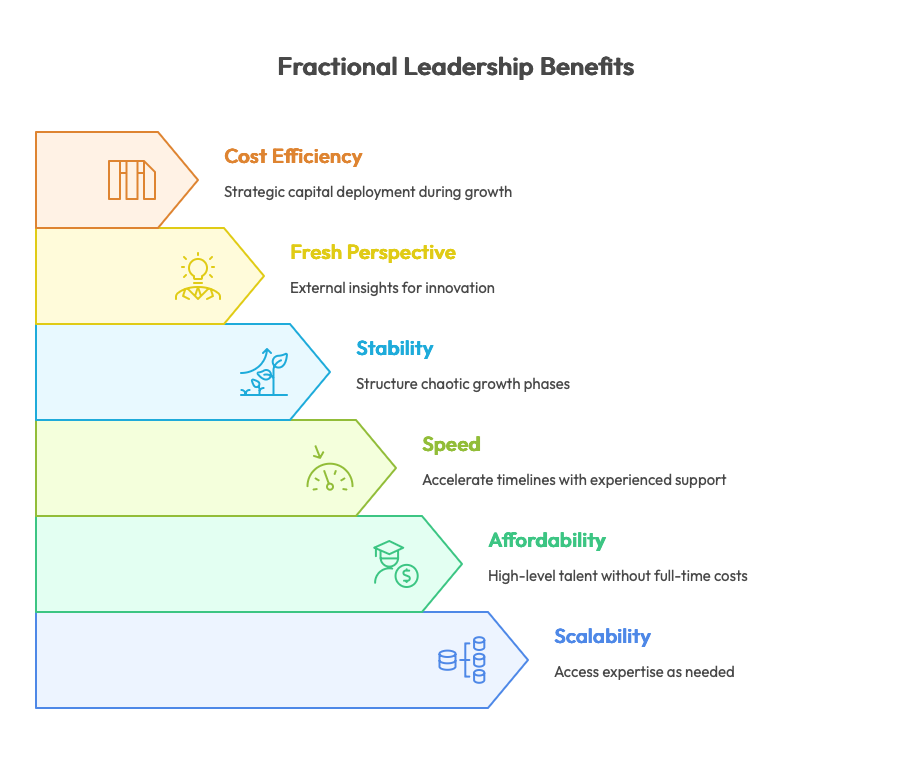
Early-stage companies often can't justify a full-time Head of Program Management, BD lead, or COO, but that doesn't mean they don't need those functions. Fractional leadership provides:
- Scalability: Access the expertise you need when you need it
- Affordability: High-level talent without full-time executive compensation
- Speed: Accelerate timelines with experienced execution support
- Stability: Bring structure to chaotic growth phases
- Fresh Perspective: External insights that challenge assumptions and stimulate innovation
- Cost Efficiency: Avoid the overhead of hiring full-time executives too early
How BioVertex Consulting Adds Value
At BioVertex, we partner with biotech founders and leadership teams to build and manage early development roadmaps, set up fit-for-purpose program management frameworks, support BD efforts with customized materials and positioning, and serve as a sounding board for C-suite teams navigating strategic decisions. Our approach is hands-on, flexible, and always tailored to your stage and priorities. Whether you need us for 10 hours/month or to oversee a 3-month project, we integrate where you need us most.
Fractional vs. Full-Time vs. Traditional Consulting: Understanding the Differences
Not every leadership model fits every company at every stage. Founders often default to either hiring full-time or bringing in a traditional consultant, but neither of those options is always the right answer. Understanding the distinctions between these three models is the first step toward making a strategic decision that matches your actual operational needs and budget realities.
Full-time hire becomes the right choice once a company is past Series B, has built a foundation of steady revenue, and genuinely needs dedicated institutional knowledge embedded within the organization over the long term. At that point, the investment in salary, benefits, and equity is justified because the role demands continuous, undivided attention and the executive will be shaping company culture and systems for years. Before that inflection point, however, a full-time hire often burns capital that early-stage companies simply cannot afford to allocate to overhead.
Traditional consulting is purpose-built for discrete, time-bound deliverables. If your company needs a regulatory strategy document, a competitive market analysis, or a one-time due diligence package prepared for an investor, a traditional consulting engagement is well suited to the task. The relationship is transactional by design: a defined scope, a defined output, and a clean end date. The consultant delivers the work product and exits. What traditional consulting does not provide is ongoing execution, cross-functional coordination, or the kind of embedded operational presence that a growing company in active development requires.
Fractional leadership occupies a distinct and often underutilized space between those two options. It is the right model when a company needs ongoing execution support but cannot justify or fund a full-time executive salary, benefits, and equity package. The critical distinction is that fractional leaders are embedded operators, not advisors on the sidelines. They attend your team meetings, manage your vendors, own your timelines, and are accountable for results in the same way a full-time hire would be -- just scoped to the hours and engagement model that fits your stage.
When Fractional Leadership Works Best
While fractional leadership can add value across many contexts, certain situations create a particularly strong case for this model. The following scenarios reflect the conditions where fractional program management and operational leadership tend to generate the most immediate and measurable impact for early-stage life science companies.
- Seed to Series A stage, when the founding team is primarily scientific and operational infrastructure has not yet been built
- During IND-enabling studies, when cross-functional coordination across CMC, toxicology, pharmacology, and regulatory affairs peaks and requires active program management
- When preparing for a Series A fundraise and investors need to see operational structure, a credible development timeline, and a functioning program team -- not just scientific data
- When a key operations hire has just left the organization and there is a leadership gap that cannot wait months to be filled through a traditional recruiting process
- When a company is managing multiple external vendors simultaneously and needs a central point of accountability to keep timelines, budgets, and deliverables aligned
- When the CEO is stretched across business development, investor relations, and science simultaneously, with no bandwidth remaining for operational oversight and program execution
How to Evaluate a Fractional Leader
Choosing the right fractional leader requires a more deliberate evaluation process than many founders expect. The most important criterion is direct, hands-on experience in drug development specifically -- not just general management or project management in adjacent industries. A fractional leader for a biotech company should understand the IND process, know how to build and manage a cross-functional development team, and be fluent in the language of both science and finance. Look for a documented track record of execution, not just strategic input: the candidate should be able to point to programs they personally advanced, timelines they managed, and problems they solved operationally. Ask for references from prior fractional or consulting engagements, and speak with those references directly about the quality of execution and how the leader integrated with the team.
There are also clear red flags to watch for when evaluating candidates. Be cautious of leaders who describe themselves as advisors or thought partners but struggle to articulate specific things they will do and own in the first 30 days. Avoid those who arrive with generic project management frameworks that were designed for software companies or manufacturing environments and attempt to apply them without modification to a biotech context -- life sciences has a distinct regulatory, scientific, and operational logic that demands relevant experience. Similarly, treat it as a warning sign if a candidate cannot clearly and concisely explain how they will add tangible value within the first month of the engagement. A strong fractional leader comes in with a point of view, earns trust through early wins, and builds credibility by doing the work alongside your team.
Is Fractional Right for You?
If you're a startup at seed or Series A stage, preparing for IND, building your first TPP, or trying to close a key partnership, fractional leadership could bridge the gap between ambition and bandwidth.
📣 To explore how BioVertex Consulting can support your next phase of growth, reach out: